
Spend a few minutes on Metal Pro Buildings and you immediately get a sense of what the brand stands for. There’s an emphasis on strength, accuracy, and work that’s meant to last. It’s not flashy for the sake of it. Instead, the site leans into solid construction, engineered solutions, and a mindset that values things done right the first time. That same philosophy translates surprisingly well into the automotive performance world—especially when you start talking about exhaust components and custom fabrication.
Car enthusiasts often chase numbers: horsepower, torque, quarter-mile times. But behind every meaningful upgrade is something more practical and less glamorous—materials, welds, tolerances, and design decisions that don’t show up on a dyno sheet, yet influence everything. That’s where the crossover between industrial-grade fabrication and performance parts becomes interesting.
A downpipe, for example, looks simple on paper. It’s just a section of exhaust that routes gases away from the turbo. But anyone who’s spent time under a car knows it’s never just a pipe. It’s a tight fit, exposed to brutal heat cycles, vibration, moisture, and pressure. The difference between a mediocre part and a great one often comes down to the same principles you’d apply when building a steel structure meant to stand for decades.
Think about load paths in metal buildings. You don’t guess where the stress will go—you design for it. In performance exhausts, the “stress” is heat and flow. Poorly designed bends create turbulence. Thin materials warp. Bad welds crack. When fabrication is rushed or treated as an afterthought, performance gains can disappear faster than they arrived.
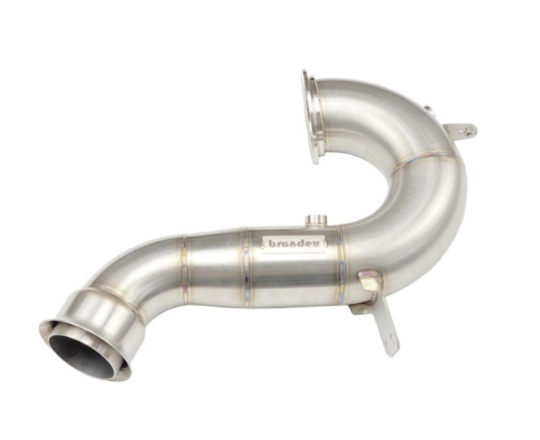
That’s why enthusiasts who understand engineering tend to gravitate toward parts built with intention. Take the bmw m140i downpipe, for instance. On the surface, it’s a popular upgrade because the car already has strong bones—a compact chassis, a turbocharged inline-six, and tuning potential that’s hard to ignore. But what really makes a difference is how the downpipe is designed and manufactured. Smooth mandrel bends, consistent wall thickness, and properly placed flanges can dramatically change how the turbo breathes. The result isn’t just more power; it’s smoother delivery, better throttle response, and a car that feels more cohesive rather than simply louder.
This is where the mindset behind industrial fabrication matters. Companies that live and breathe metalwork understand that steel and alloys have personalities. They expand, contract, fatigue, and react to their environment. Designing with those realities in mind is second nature when you’re building structural systems. Applying the same discipline to automotive parts creates components that don’t just perform on day one, but keep performing years later.
Modern performance culture sometimes forgets longevity. Social media rewards instant results—before-and-after clips, quick installs, dramatic sound changes. But ask anyone who’s owned a modified car for more than a couple of years, and you’ll hear a different story. The best upgrades are the ones you stop thinking about. They don’t rattle. They don’t throw codes. They don’t need constant adjustment. They simply work.
The same logic applies when stepping into the luxury performance segment. A car like the AMG GT 4-Door is engineered to balance comfort and aggression, refinement and rawness. Upgrading components here isn’t about turning the car into something it’s not. It’s about enhancing what’s already there without compromising the original character. A well-made gt53 downpipe does exactly that when it respects the factory engineering instead of fighting it. Proper heat shielding, accurate sensor placement, and materials that can handle sustained high temperatures make all the difference in a daily-driven performance sedan.
There’s also an underrated emotional side to quality fabrication. Knowing a part was built with care changes how you feel about the car. It’s similar to walking into a well-constructed metal building. You might not consciously notice every beam or joint, but you feel the solidity. Doors close properly. Nothing flexes when it shouldn’t. That confidence translates into trust—and trust is what allows you to enjoy performance instead of worrying about it.
Another parallel between metal construction and automotive upgrades is customization. No two projects are truly identical. Site conditions vary. Loads differ. Client needs change. In the car world, driving styles, climates, and goals all influence what makes sense. Someone tracking their car every weekend will prioritize different characteristics than someone who enjoys spirited highway runs. Fabrication that allows for thoughtful customization—without sacrificing integrity—is where real value lives.
This is also why cutting corners rarely pays off in the long run. Saving a little money upfront on poorly designed components often leads to chasing problems later: exhaust leaks, rattles, heat soak issues, or even engine codes. In contrast, investing in properly engineered parts feels boring at first—but boring is good. Boring means predictable. Boring means reliable. And reliability is what lets performance shine consistently.
Metal Pro Buildings’ focus on engineered strength and long-term performance is a reminder that good design principles don’t belong to just one industry. Whether you’re constructing a large-scale steel structure or refining airflow under a hood, the fundamentals remain the same. Respect the material. Understand the forces at play. Build with purpose, not shortcuts.
At the end of the day, the most satisfying builds aren’t the loudest or the most extreme. They’re the ones where every component feels like it belongs. Where upgrades complement the original design instead of overpowering it. Where performance gains come with confidence, not compromise.
That’s the quiet art of precision engineering—something you can see in well-made metal buildings, and something you can feel every time a thoughtfully built performance car pulls cleanly through the gears.